Nail Clipping
How much does it cost to cut your pet’s claws?
We can trim your dogs, cats or rabbits claws at home.
- Nail clipping - puppies and kittens £5 per pet treatment
- Nail clipping - small dog breeds and cats £8 per pet treatment
- Nail clipping - medium dog breeds £10
- Nail clipping - large dog breeds £12
It is important to cut your dog's nails regularly because long claws can increase the risk of injury. Too - long nails can even lead to difficulty walking and over time, your dog might develop spine and posture problems (like sitting or standing oddly) due to frequently shifting weight. We offer a professional nail clipping service during which we examine, clip and advice on your pets nail health.
Dog’s nails grow constantly throughout their life. Regular walks on hard surfaces such as the pavement, also running and digging will naturally wear your dog’s nails down. Nowadays modern dogs spend more time on soft carpets and it is common for overgrowth to occur. Long nails can get caught and break, causing pain and bleeding, or grow so long that they curve and dig back into the skin. If your furry friend is a senior, walking on overgrown nails can cause discomfort and pain if they have arthritic feet.
In general, nails that are too long can limit your dog’s movements, leading to difficulty walking, lameness or serious injury; especially if they’re so long that they touch the ground and you hear them clicking or see them turn sideways, it’s time for a trim. Ideally, you should be able to slip a piece of paper between your dog’s nails and the floor.
In well-behaved dogs with light coloured nails, it may be possible to trim the claws yourself at home. However, in more challenging cases or individuals with very dark claws, it may be advisable to have this performed by a vet. If you are in any doubt, please contact MPVS to arrange an appointment with a member of our veterinary team.
How to cut your dog’s nails
Find a position that is comfortable for both you and your dog. Large dogs can often stand or sit while lifting one paw at a time. Small dogs can, for example, lie on your lap.
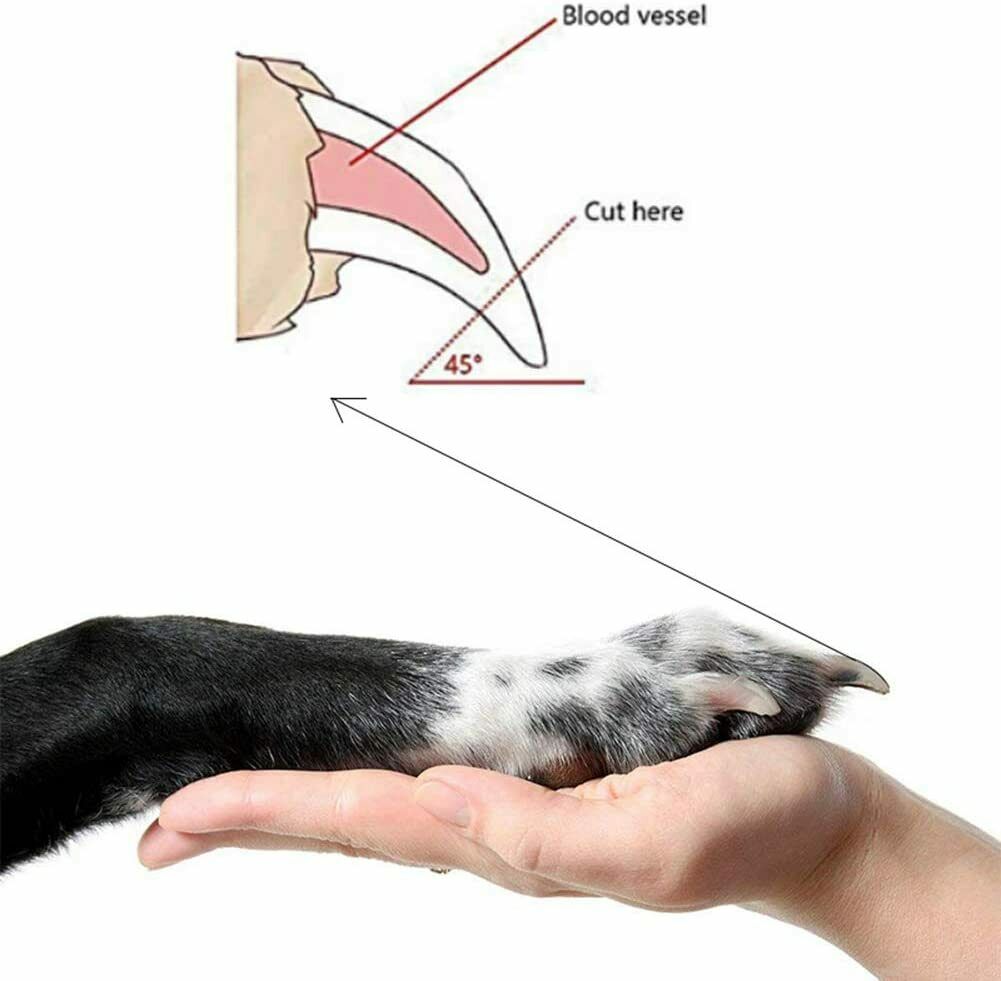
White dog nails
Light coloured claws are easier to cut than dark claws as the blood vessels and nerves that supply the claw, called the quick, are easier to see. Cut the claw to within approximately 3 millimeters (0.1 inch) of the quick. If you cut into the quick, the claw will bleed and the dog will experience pain.
Black dog nails
If your dog’s claws are black, you won’t be able to see the quick, and you’ll have to look closely to assess where it appears to be. You can trim the same claw several times if needed to reduce the chance of cutting into the quick. If you see a black dot in the centre of his nail, you have reached the quick and should stop cutting right away.
Remember, though, that every nail is different, with varying lengths of quick, so don’t dive into doing the next one just as short.
Don’t forget to cut your dog’s dew claws. If left untrimmed, these nails can grow into the soft tissue, a bit like an ingrown toenail for us. Most dogs only have dew claws on the front legs, but you should check the back ones if your dog has them or if you aren’t sure. Because these don’t contact the ground, they don’t get worn down and should be regularly checked.
The sharper the nail clipper, the cleaner the cut.
Sometimes the edges of the nails become sharp after cutting them. You can use a file to smooth
the cut surface.
What if I cut my dog’s nails too short? What should I do if they start to bleed?
If you cut your dog’s nails too short and cut into the quick, your dog will probably struggle and cry, and the nail will quickly start to bleed. Don’t panic it is usually only a minor injury and your dog will be fine. Try to calm your dog down and take a look at the nail to assess the situation.
Apply pressure to the cut surface of the nail with cotton wool or a pad of kitchen roll for 3-5 minutes.
Make sure your dog does not disturb the clot for up to half an hour afterwards.
If you are clipping your dog’s nails at home you can get powders, pens and sticks which are clotting agents, and will stop the bleeding faster when applied with pressure to the nail, although they can sting slightly. It is advisable to have one of these in your dog first aid kit.
How often should I cut my dog’s’ nails?
If your dog walks on concrete or other hard ground regularly, this should wear the nails down naturally, and they may never need clipping. Other dogs may need them cutting more frequently (every few months) if walked only on soft ground.
Dew claws may not wear down as quickly as the other claws as they do not touch the ground, and may need trimming as often as every 3 months.
The nails on the back paws often wear down more than the nails on the front paws, and so usually don’t require as much to be clipped off.
Rewards
Try and keep the experience positive by giving high value treats.